
We have launched a crowdfunding campaign to produce a book, The Multigraph: The Hallucinatory Chronicle of a Mirage.
The book rescues an extraordinary and once ubiquitous photographic technique, the multigraph, from oblivion. It unveils the role of the technique in Antoni Gaudí’s work. It traces the impact in an iconic image of the pioneering Spanish photojournalist, Agustí Centelles. And it explores how the multigraph prefigured the technologies we now know as virtual reality.
A captivating work of speculative history, with a particular focus on Barcelona, the book blends archival material, visual essays, and technical reconstruction. By so doing, it reveals how the multigraph emerged in the city - and how it anticipated ways of representing reality that remain very much alive today.
Backers will have the opportunity to have their very own multigraph taken, using a 21st century studio reconstruction of the original 19th century mechanism.
With your support, we will also curate an exhibition in Barcelona that brings the journey full circle: back to where it all began.
Help us make the project a reality together!
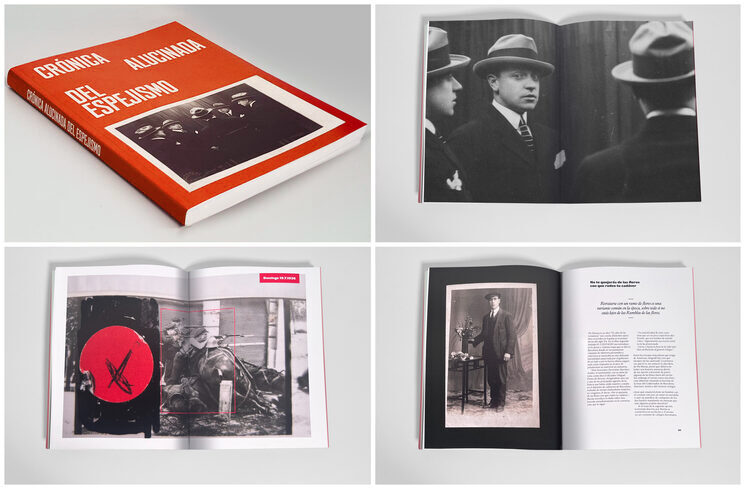
The Mirage
The book, The Hallucinatory Chronicle of a Mirage, tells the story of a photographic technique that first emerged in the 19th century, regained widespread popularity the early 20th, only to be lost again.
The story begins at a time of upheaval. Militarily, ranging from the First World War to widespread local banditry and the onset of the Spanish Civil War. Economically, with the 1929 crash serving as the new barometer of capitalism’s problems. And technically, with the emergence of new cameras and photographic processes that would change the course of what and how we photograph.
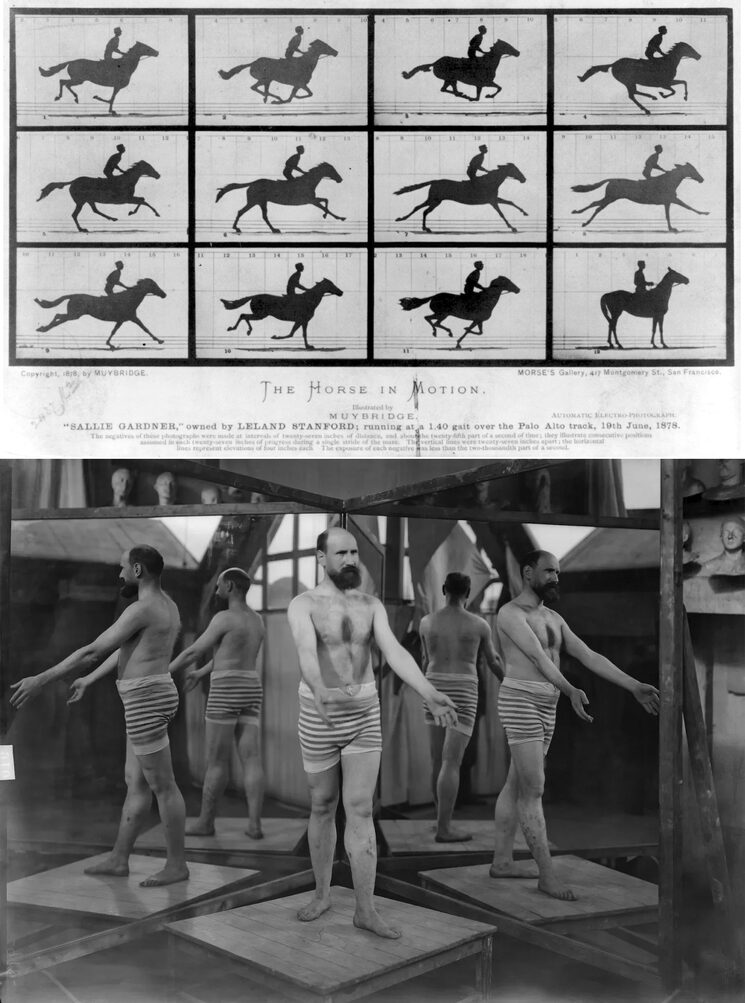
One of these new techniques, using multiple mirrors to capture four reflections projected by a subject with their back to the camera, captivated the public and was offered in specific photographic studios. It became known as the multigraph.
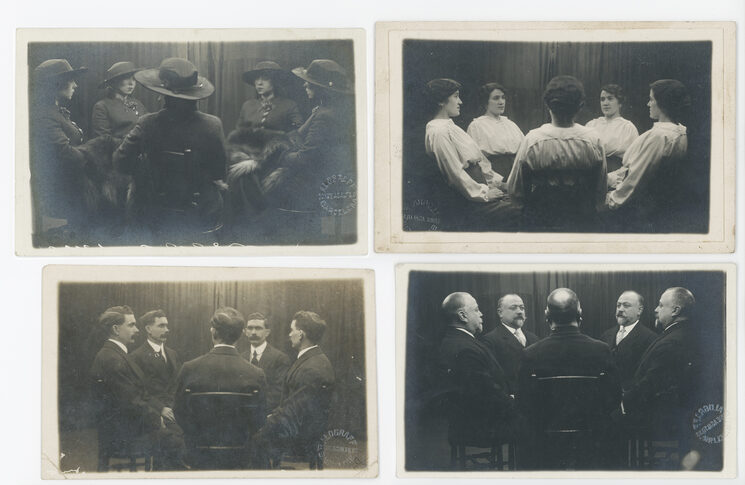
In Spain, the technique was given many names. The book title’s espejismo - mirage - was chosen for its captivating power and its precise description of how the reflection effect is achieved. I took it from a single handwritten note, on the reverse side of a multigraph, held in the photographic archive of the Community of Madrid.
The chronicle
After an initial resounding success, the photographic technique fell into oblivion for a second time. This hallucinatory chronicle of the mirage brings it back into the light.
A chronicle is composed of facts and may contain anecdotes, legends and even speculation. It is structured into instances I call hallucinations - or: an ‘archaeology of chance’.
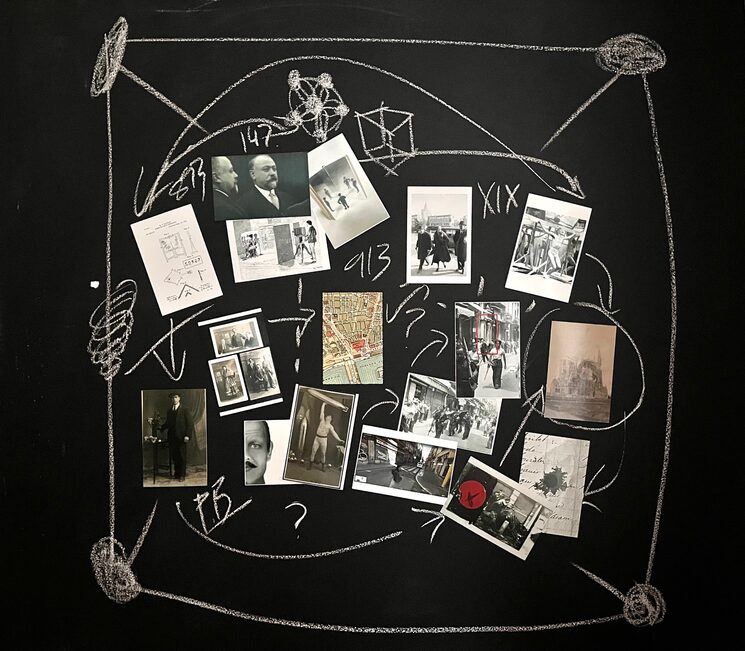
Taken together, The Hallucinatory Chronicle of a Mirage illustrates the historical transformation of an idea. An idea that drives a visual revolution whose scope we, as users, can now experience. An idea that takes us from the multigraph to photogrammetry and Nerf or Gaussian splatting today.
The hallucinations
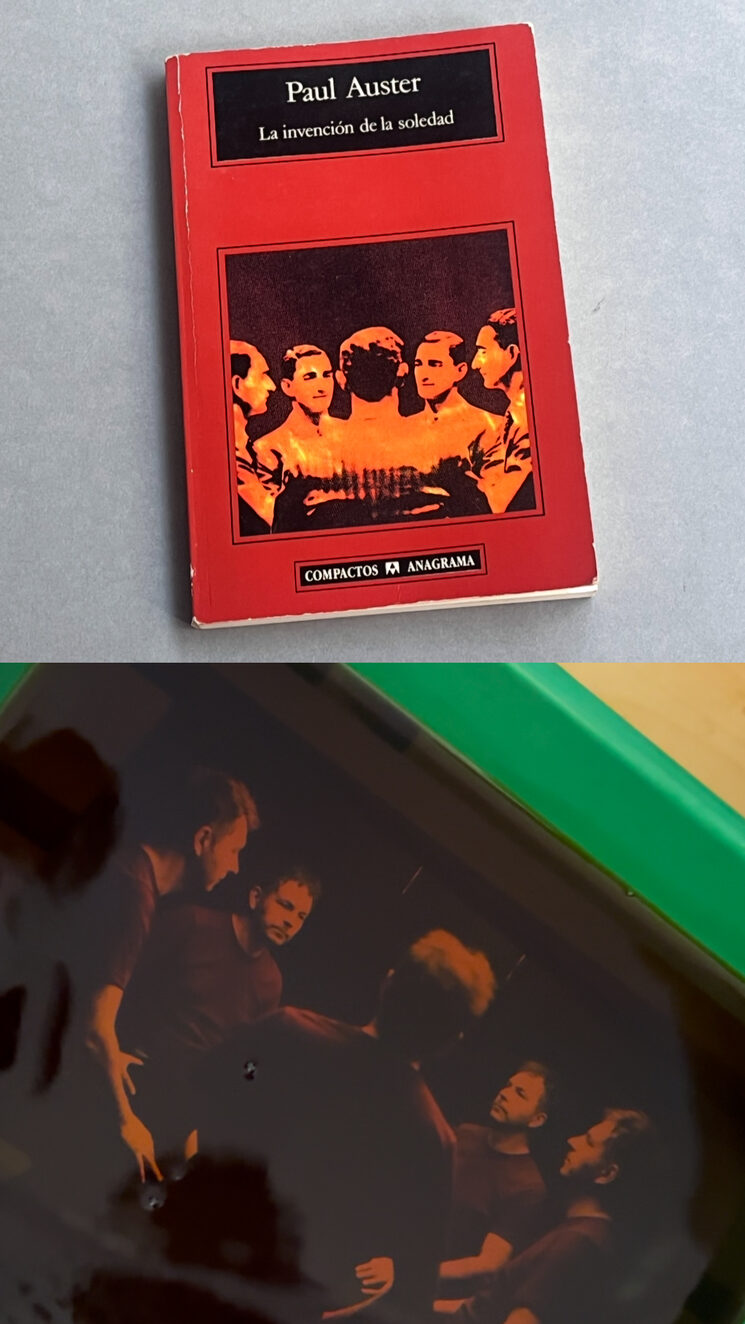
The first hallucination involves decoding a famous photograph by Agustí Centelles, in which the photographer captures the opening moments of the Spanish Civil War.
This is the scene he choreographed and captured on Carrer Diputació in Barcelona on 19 July 1936.
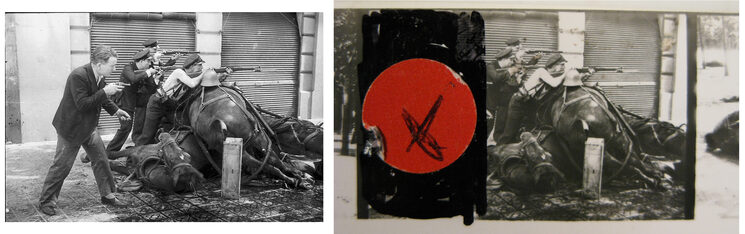
The second hallucination takes us even further.
The chronicle describes how the technique is used in one of the architectural landmarks of Modernism. Antoni Gaudí used (and improved) the multigraph technique to ‘render’ the organic ornamentation of the Nativity façade of the Sagrada Família. The building, which Gaudí knew he would not see completed in his lifetime, seems to offer us an immersive experience. You might call it a virtual reality carved in stone.
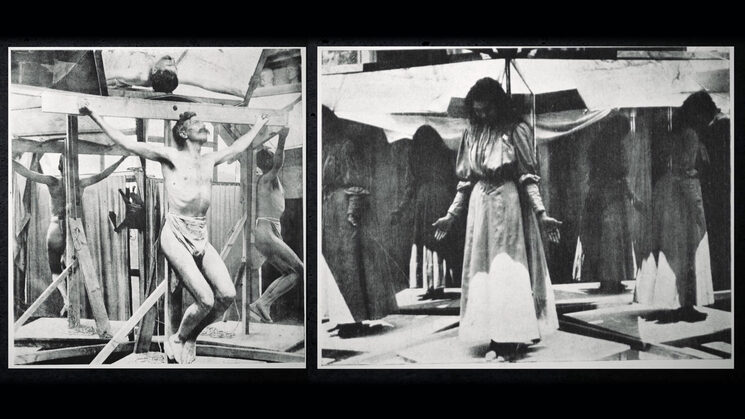
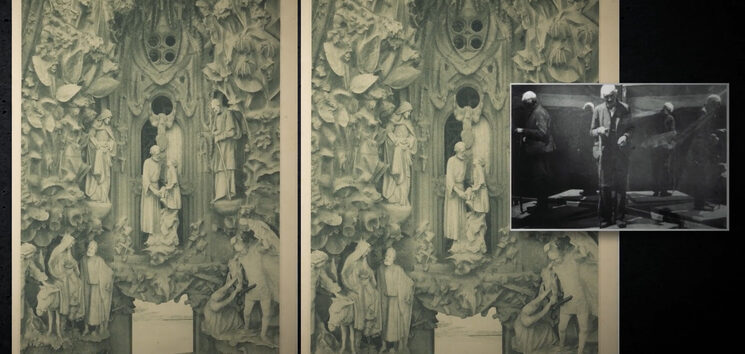
Building on those hallucinatory snapshots, the book explores how the current revolution in visual representation, which constructs virtual worlds from 2D sources, has a surprising precedent – dating back to the very moment when angled mirrors and a camera were combined in a 19th-century patent.
Could a long-forgotten portrait technique shed light on one of the most well-known buildings we have today? Might we even see it as a precedent for the immersive 3D simulations and interconnected virtual environments we call the metaverse today?
Resurrection
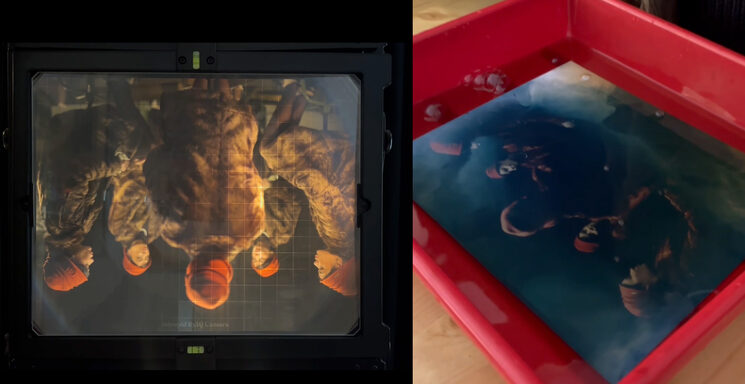
Inevitably, the idea of using the technique again in a photographic studio began to take shape as part of the research. This, then, is the third hallucination: I have recreated the mechanism of the mirage.
Following the plans from H.P. Ranger’s expired 1893 patent, but incorporating modifications, we constructed movable walls covered in mirrors. Combined with a large-format camera, they produce the original Multigraph effect.
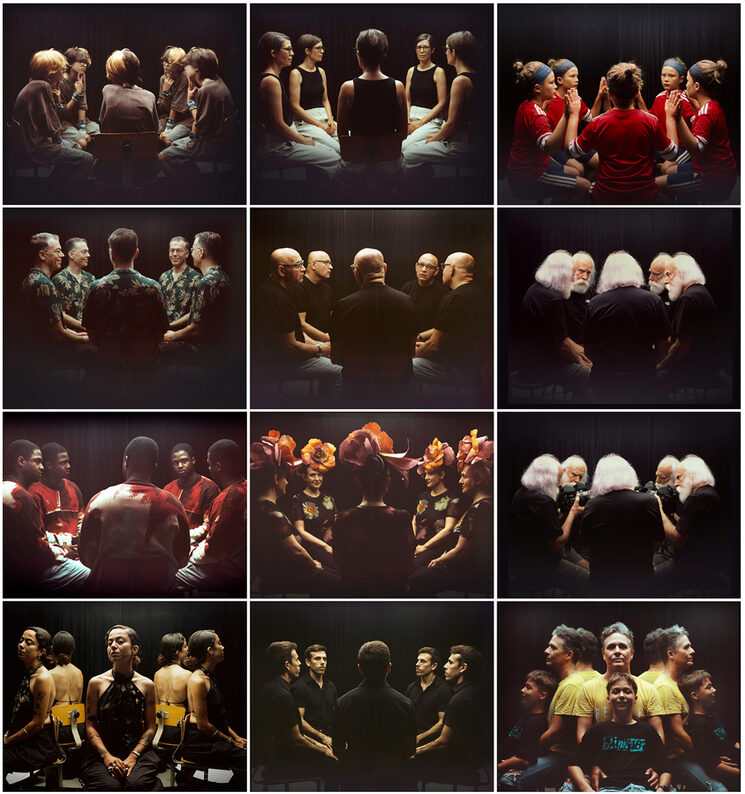
In 2026, we can once again have quintuple portraits taken. It is probably the only remaining structure where the portrait can be split into five parts in a single shot, following the original concept.
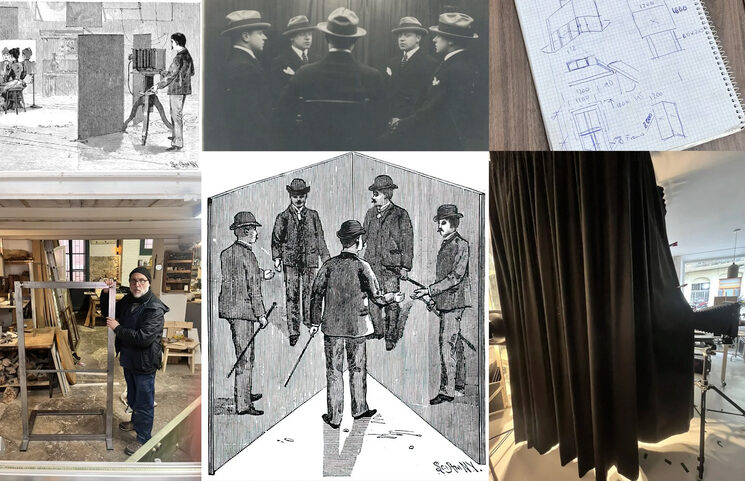
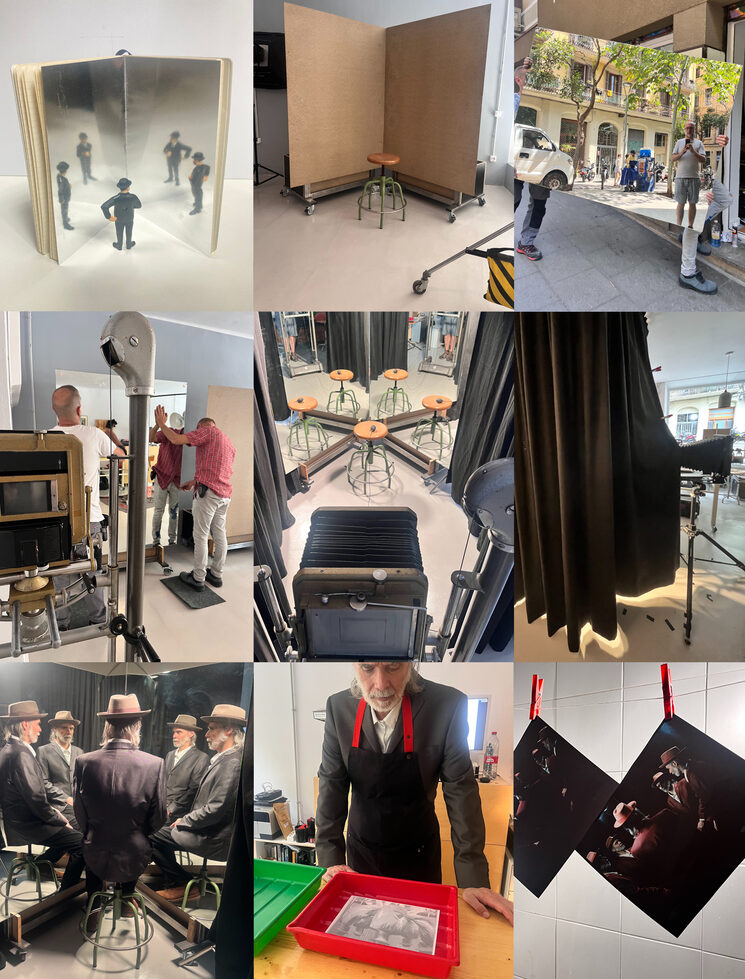
Your contributions will make it possible for the book to go to production and distribution.
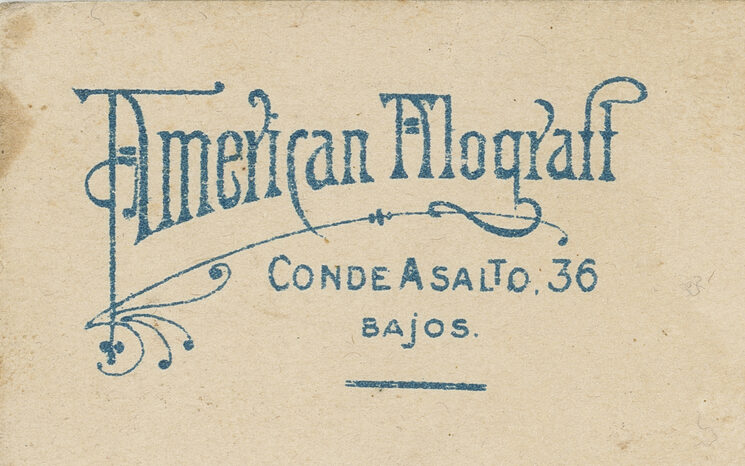
They will also go towards an exhibition, to be shown on the site of the former American Alograff studio, now a hotel, where the first multigraphs were created in Barcelona. Visitors will be able to view originals from my archive in the very place they were created.
With your backing, you will receive a book (26€) and, if you opt for it, a framed reproduction + book (48€).
You can also choose to join a guided visit + book (60€), experiencing the Barcelona sites that appear in the book.
And you may have your very own multigraph taken - a portrait + book (120€), which no future photographic technique has been able to emulate. Neither the photo booth nor its evolved form, the selfie, evokes such a sense of wonder!
How your contributions will be used
The lion share of the funds raised will go to the production of the book and the cost of postage to backers.
The remainder will be used to cover exhibition costs.
The target amount will cover costs and taxes. Should it be exceeded, the additional funds will be used to compensate contributors.
Timetable
Book goes to press: November 2026
Rewards dispatched: Between 25 November and 15 December 2026
Backers may choose to collect their rewards in person at the book launch events or at my studio in Barcelona.
Características técnicas del libro
Design: https://www.marnich.com
Binding: sewn paperback binding
Interior
Dimensions (closed): 19 x 25 cm o 16,5 x 23 cm
Pages:120 pgs
Paper: Pergraphica Classic Smooth 120g
Inks: 4 + 4
Cover
Papel: Pergraphica Classic Smooth 240g
Tintas: 4 + 4
Language: Spanish
Credits
Video: Felip Docolomansky and Julio Dean
Images: Agustí Centelles (Documentary Centre for Historical Memory), Darius Koehli, RA Archive, Arxiu Mas (part of the Amatller Institute’s photographic archive), Archive of the Crown of Aragon (ACA).
3 comments
If you are already a sponsor, please Log in to comment.
joansorolla
A veure aquesta màgia!
lekuk
Un abrazo! ❤️🎩
Chechu Disparafilm
Mucha suerte con el verkami Miguel!