
Training of personnel for the conservation of large felids in Petén
The Maya Biosphere Reserve, in Petén, Guatemala, hosts some of the best-preserved seasonal rainforest habitats in Mesoamerica.
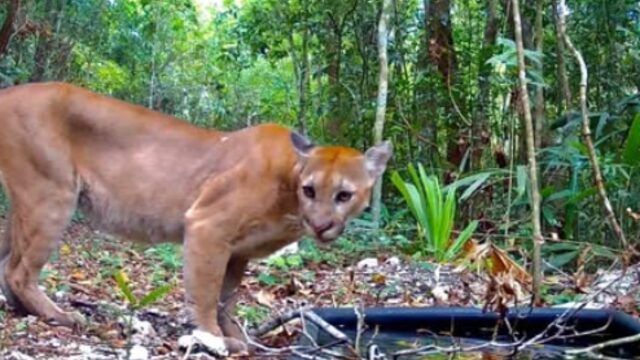
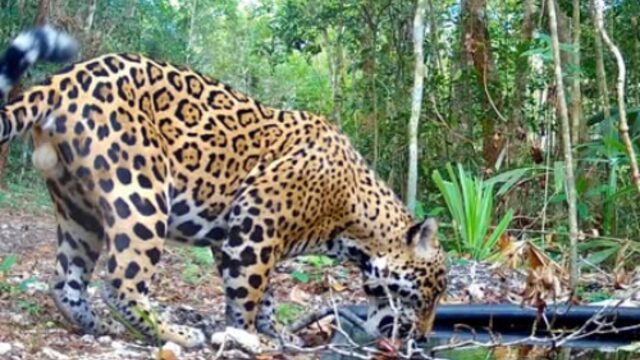
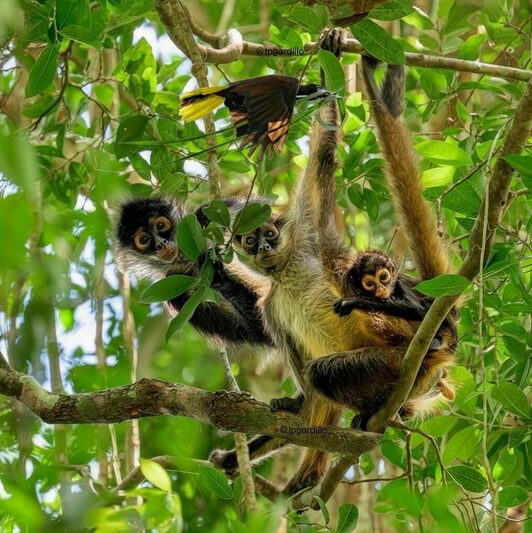
It is home to emblematic species such as Jaguar, Puma, Ocelot, Baird’s Tapir, Mantled Howler Monkey, Spider Monkey, and others, which act as umbrella species for the protection of the entire habitat.
Unfortunately, the threats to these habitats are as great as their ecological value.
Illegal land occupation for agriculture, illegal hunting, wildlife trafficking, and the opening of routes for drug trafficking are just some of the activities that put the biodiversity of these natural areas at risk.
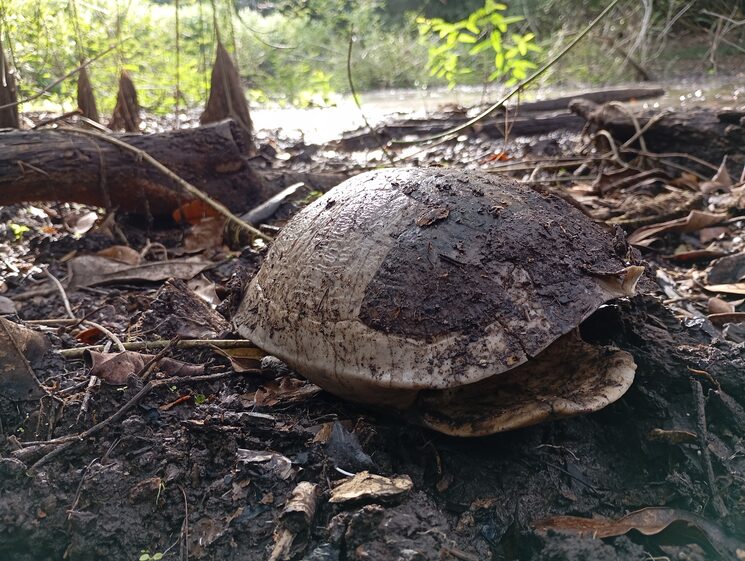
In addition, the effects of climate change must be considered, such as the proliferation of forest fires (not always natural) during the dry season and the water stress affecting the so-called aguadas, low-lying areas where water accumulates and which serve as natural drinking sites during the dry season.
These aguadas now dry out more frequently, and the animals that depend on them can end up dying from dehydration.
In this context, a group of people is working on conservation to an extent that is not easy to see in many parts of the world.
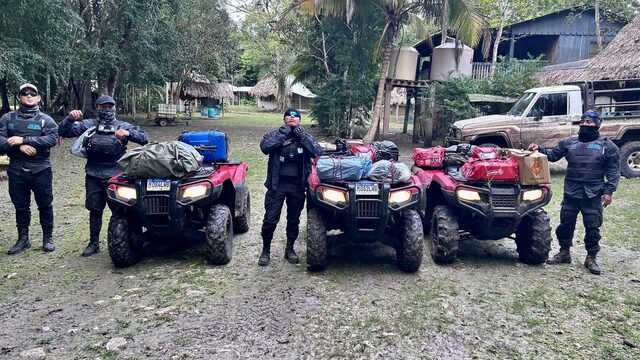
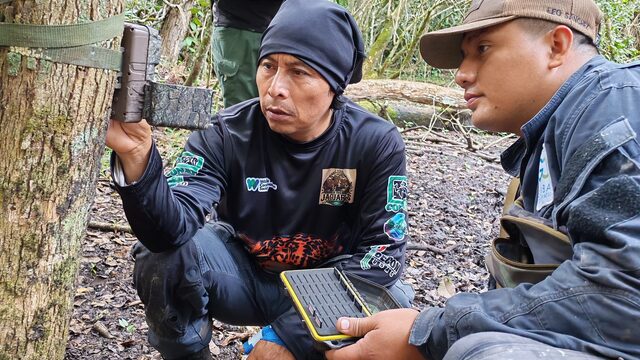
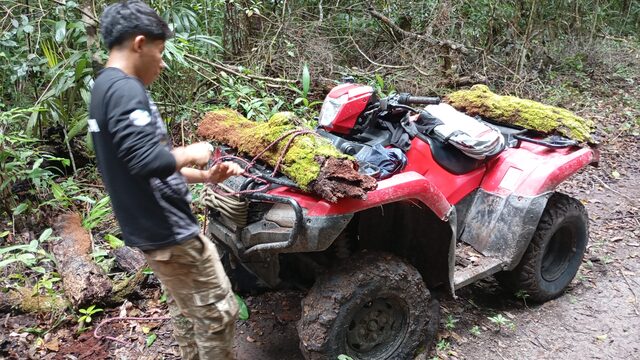
At the Dos Lagunas Biotope, within Mirador-Río Azul National Park, owned by the Government of Guatemala and managed by FUNDAECO, the ranger team known as Génesis has been formed. It operates under the coordination of Francisco Asturias and with the support of FUNDAECO, facing every day all the conservation challenges we have mentioned, others you can imagine, and many more that those of us who do not live there cannot even conceive.
And, as you can imagine, maintaining this activity is not free. Nor cheap.
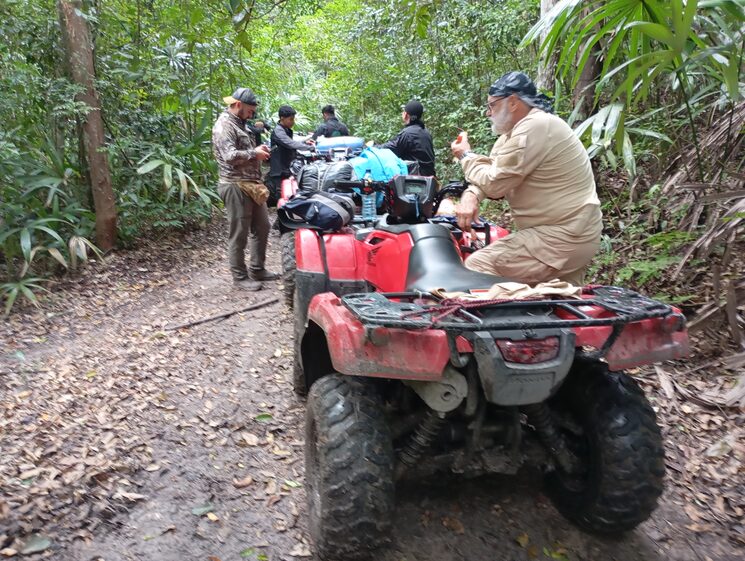
To financially support the essential work of the Génesis ranger team, it is necessary to develop nature observation tourism activities.
To this end, FUNDAECO, Guatemala Nature, and Panthera Conservation have taken the initiative, initially supported by INGUAT, to bring staff from PHOTO LOGISTICS to the Dos Lagunas camp to assess the situation and help develop a wildlife photography and observation tourism product.
The conclusion could not be clearer: staff training is needed to develop photographic hides in the area.
The goal is for tourism activity to generate just enough income to cover part of the conservation action costs.
It will not go beyond the number of visitors required to meet this need. Nor will more hides be installed than necessary.
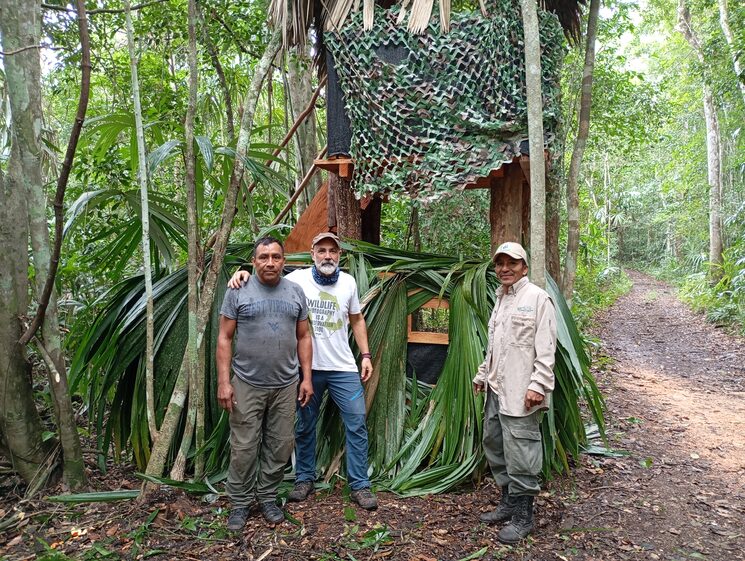
The objective of this Verkami project is therefore to cover the travel and basic living expenses of one reserve ranger: Alan Juárez, a 22-year-old who will join the Photo Logistics team during the peak working season in Montgai (Catalonia) to acquire knowledge on the construction, installation, and management of hides, which he will later apply in Dos Lagunas to develop a regenerative tourism product that supports conservation activities.
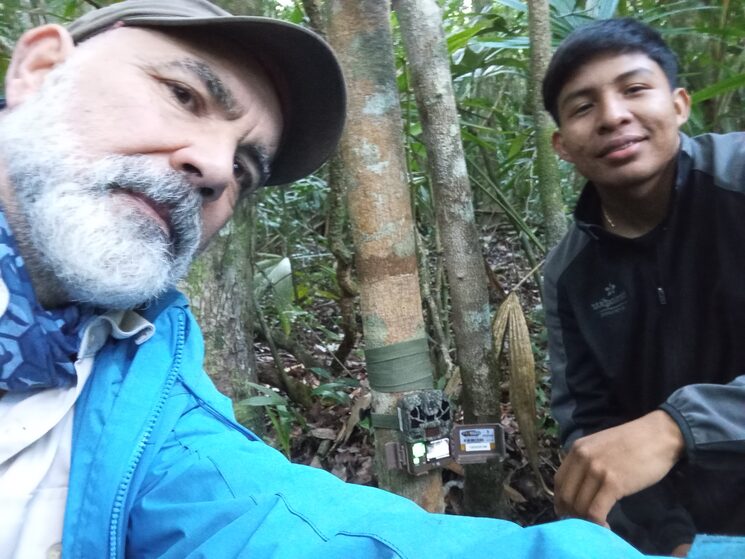

PHOTO LOGISTICS is a company specialized in wildlife photography that designs and manages professional hides to observe and photograph animals in an ethical and respectful way, actively contributing to conservation projects and taking into account the social impact on the environments where it operates.

0 comments
If you are already a sponsor, please Log in to comment.