
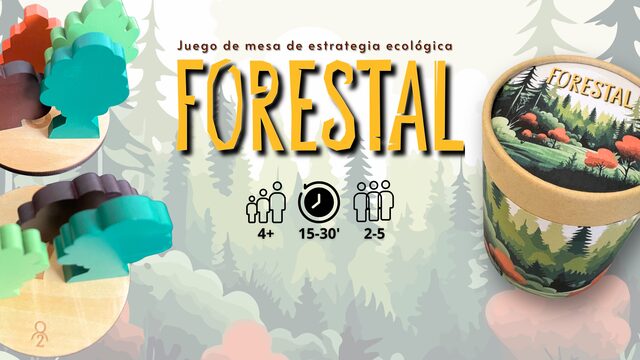
Forestal es un juego de estrategia ecológica para toda la família.
Un juego para entretener pero también para divulgar y participar en la concienciación de niños y adultos de la necesidad e importancia del cuidado de los bosques .
Que quiere decir juego de estrategia ecológica ?
Primero y para empezar, que esta fabricado 100% en madera y productos derivados de ella, por lo que reduce la huella de carbono y consumo de plasticos.
Segundo, que al comprarlo participas activamente en la regeneración de los bosques españoles, ya que una parte va destinada a proyectos de reforestación.
Y tercero, que la filosofía del juego es aprender jugando a comprender un poco más el funcionamiento y necesidades para el desarrollo, crecimiento y sostenibilidad de los arboles y bosques.

Forestal es un juego de estrategia ecológica rápido y familiar, donde el único requisito imprescindible para poder jugar es saber sumar. El juego se trata en alcanzar el mayor número de puntos en cada final de turno, y llegar con el máximo número de puntos acumulados al final de los 5 turnos de los que corresponde cada partida.
Preparación
Escoge tus arboles
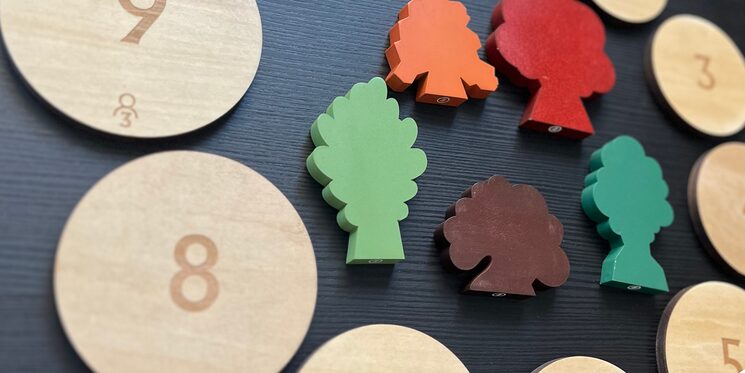
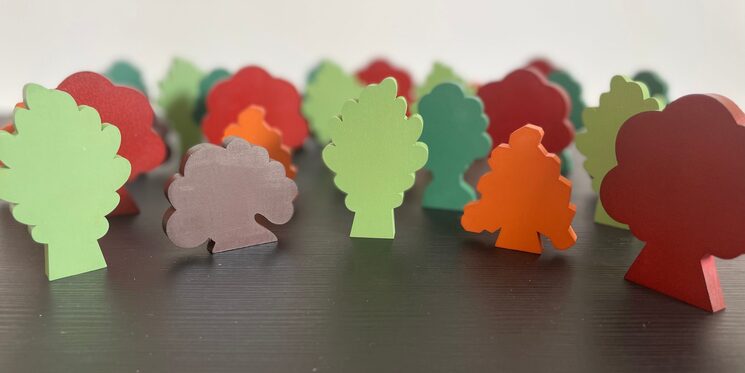
Cada jugador debe empezar escogiendo las fichas o tokens correspondientes a una de las 5 especies de arbol existentes en el juego ( Roble, Olmo, Castaño, Arce y Abedul ).
Tablero de tierras
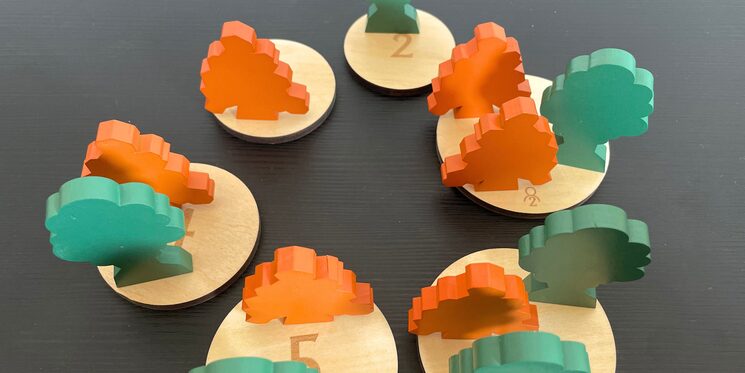
El tablero esta constituido por losetas o círculos individuales (“tierras”), cada uno con un valor numérico, empezando con la de menos valor que es la del 2.
Las tierras se colocaran en orden ascendente de sus valores, en sentido horario.
Dependiendo del número de jugadores, se utilizaran mayor o menor número de tierras.
2 jugadores : 7 tierras
3 jugadores : 9 tierras
4 jugadores : 10 tierras
5 jugadores : 11 tierras

Mecánica
Los jugadores deben colocar sus árboles uno a uno y por turnos, sobre las diferentes tierras que conforman el tablero. El objetivo es alcanzar el mayor número de puntos en cada final de turno, y llegar con el máximo número de puntos acumulados al final de los 5 turnos de los que corresponde cada partida.
Al finalizar la colocación de todos los árboles, se procede al sumatorio. Se girarán los árboles para mostrar el valor oculto de cada uno. Se sumaran los valores de todos los árboles que se encuentren encima de la misma tierra
3 MODALIDADES DE JUEGO
*Modalidad supervivencia *
Se utilizan 5 árboles ( se excluye el árbol con el carácter especial • ).
Una vez acabados todos los turnos, los jugadores procederán a darle la vuelta a los arboles, dejando ver el valor de cada uno de los arboles en su correspondiente tierra.
Se contabilizaran como árboles enraizados o que han logrado crecer, ( y por lo tanto puntuaran ) aquellos árboles cuyo valor sumado al del resto de los otros jugadores en la misma tierra, no supere o sea igual al valor de la tierra donde hayan sido colocado.
Ejemplo: Si en la tierra de valor 4, hay 2 arboles, cada uno de un jugador diferente, y contienen el valor de 2 y 1 respectivamente. Los dos jugadores podran sumar esos puntos. En el caso de que hubieran colocado arboles con el valor de 2 y 3, los dos jugadores se quedarían sin sumar ningun punto para esa tierra al superar con la suma total el número de arboles permitidos para esa tierra.
Se realiza la operación por cada una de las tierras, donde cada jugador deberá contabilizar y sumar el número de árboles que haya conseguido enraizar por cada tierra, obteniendo el total de árboles enraizados de esa ronda por jugador.
Modalidad Incendio
Se utilizan 6 árboles, los 5 con valores númericos y se añade el del símbolo especial • )
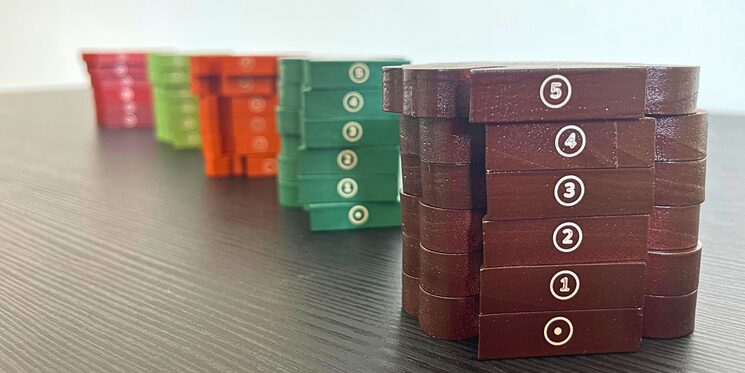
La peculiaridad de dicho árbol, es la de eliminar los arboles de otros jugadores en la tierra en la que se encuentre. En caso de existir otro árbol con carácter especial en una misma tierra se anularan mutuamente, sin alterar el valor total en el momento del final de la ronda ( el sumatorio).
Modalidad inundación
Se utilizan 5 árboles ( se excluye el árbol con el carácter especial • ).
Este modo de juego se basa en tener que mover de manera adicional y obligatoria un de los árboles ya colocados sobre las tierras, (una vez se hayan colocado todos los árboles de todos los jugadores sobre las tierras). El árbol elegido solo se podrá mover a una tierra de valor superior, con la excepción del salto entre la tierra de mayor valor de la partida (dependiendo del número de jugadores) y la de menor, que siempre será la de valor 2.
FINAL DEL JUEGO
El vencedor del juego será el que obtenga mayor puntuación una vez finalizadas 5 rondas, en cualquiera de las 3 modalidades.
En caso de empate al finalizar todas las rondas, el ganador será quien haya logrado mayor número de árboles enraizados en la última ronda del juego. Y si sigue habiendo empate, será el jugador con el árbol o arboles con mayor valor que haya podido sumar en el último turno.
*Todas las imágenes que aparecen sobre el juego, están basadas en el prototipo. Las unidades finales se veran alteradas pudiendo verse modificados colores y tamaños de tokens.
0 comentarios
Si ya eres mecenas, Inicia sesión para comentar.